 Birch Bay
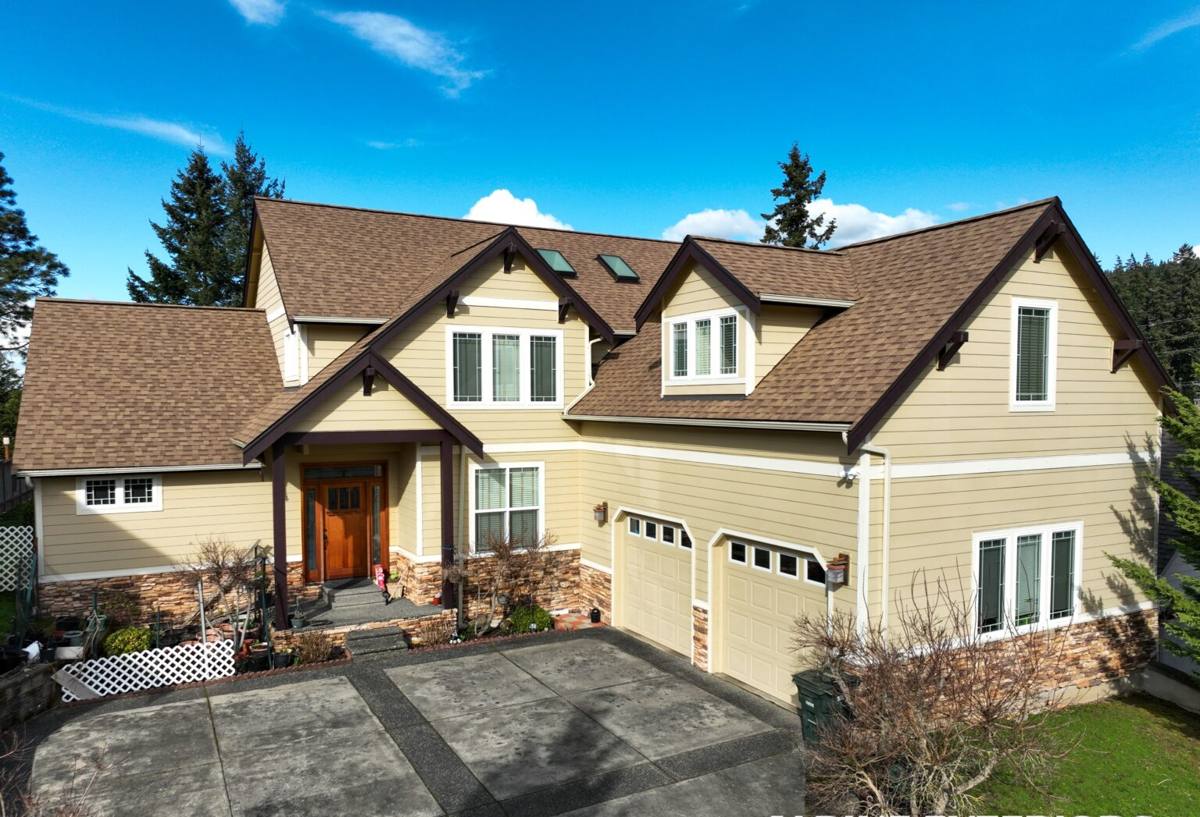
 Siding Installation for Terrell Creek Homes
Terrell Creek sits in the low-lying, wooded corridor between Birch Bay and the surrounding Whatcom County shoreline, and homes here deal with a specific combination of conditions that inland houses simply don't face. Salt-laden air drifts in off Birch Bay itself. Wind-driven rain comes in sideways during fall and winter storms. And the tree cover that makes the neighborhood attractive also means shade, damp ground, and a moss season that can run most of the year. Siding installed here has to be chosen and installed with all three of those factors in mind at once — not just one of them.
This page is about siding installation specifically, for this specific area. If you're comparing bids, deciding whether to repair or replace, or just trying to understand what a correct job looks like before you sign anything, this is the information that matters most for a Terrell Creek property.
What Salt Air, Driving Rain, and Moss Season Do to Siding
Salt Air
Airborne salt from Birch Bay settles on exterior surfaces year-round, and it's more aggressive on some materials than others. It accelerates corrosion on exposed metal fasteners and trim, and it can degrade paint finishes faster than a dry inland climate would. Siding that isn't factory-finished for coastal exposure tends to chalk, fade, or need repainting sooner than the manufacturer's own literature might suggest.
Driving Rain
Birch Bay's storms don't just fall straight down — wind pushes rain sideways into wall assemblies, especially on west- and south-facing elevations that face open water or clearings. This is a drainage-plane problem as much as a material problem. Even a genuinely water-resistant siding product will let moisture in behind it if the house wrap, flashing, and drainage gap aren't installed correctly. Most of the siding failures we see in this area trace back to installation shortcuts, not the siding material itself.
Moss and Sustained Moisture
Tree cover and damp ground around Terrell Creek keep humidity elevated near the house longer than it would be in an open, sun-exposed lot. That's ideal for moss and mildew growth on any siding surface that holds moisture or has organic material (wood pulp, in some products) as part of its composition. Siding that can't shed water quickly, or that softens or swells when it stays wet, is going to lose that fight over time.
What a Correct Siding Installation Involves
The siding board itself is only part of the job. In a climate like this, the assembly behind the siding is just as important as what you see on the wall.
Weather Barrier and Drainage Plane
Every wall needs a continuous, properly lapped weather-resistant barrier underneath the siding, with a drainage gap that lets any moisture that does get behind the siding drain back out instead of sitting against the sheathing. This is the single most important — and most commonly skipped — part of a coastal siding job.
Flashing and Trim Details
Windows, doors, roof lines, and any place two wall planes meet are where wind-driven rain finds its way in. Correct flashing at these transitions, installed in the right order relative to the weather barrier, is what actually keeps water out — not the siding surface alone.
Fasteners
Corrosion-resistant fasteners, set to the manufacturer's specified depth and pattern, matter more here than in a dry inland climate. Overdriven or under-driven nails are a common cause of premature siding failure, and salt air will find and exploit any fastener that isn't rated for coastal exposure.
Manufacturer Specifications
Every siding product has an installation manual with clamping requirements, minimum clearances (from grade, roof lines, and decks), gapping, and caulking instructions. Following it isn't optional paperwork — it's what keeps the manufacturer's warranty valid and what actually determines whether the siding performs as designed.
Why We Install James Hardie Fiber Cement — and Nothing Else
We install James Hardie fiber cement siding exclusively. We don't install vinyl, LP SmartSide, Cemplank, Allura, primed spruce, or cedar. That's a deliberate standard, not a sales preference, and it comes down to how these materials actually perform in a Whatcom County marine environment over decades, not just in the first few years.
Fiber cement is non-combustible, doesn't expand and contract with humidity the way wood-based products do, and doesn't absorb and hold moisture the way engineered wood siding can. James Hardie's ColorPlus finish is factory-baked on and warranted against fading and peeling, which matters directly here — a field-painted or site-finished product is fighting salt exposure and UV with a coating that wasn't engineered for it. Hardie also builds region-specific formulations (their HZ5 product line is engineered for climates with real moisture exposure), which is a meaningfully different approach than a one-size-fits-all siding product.
None of this means other products are junk — wood siding has real aesthetic appeal, and vinyl has a real price advantage. But we've made a professional call that in this climate, the trade-offs of those materials (repainting cycles, moisture sensitivity, seam and fastener behavior, warranty structure) aren't ones we're willing to put our name behind. Hardie is what we install because it's what we're confident will still look and perform correctly fifteen and twenty years out.
Material Comparison for a Birch Bay Marine Climate
| Factor | James Hardie Fiber Cement | Vinyl | Cedar / Wood | LP SmartSide |
|---|---|---|---|---|
| Salt air / coastal exposure | Engineered HZ formulations for moisture climates | Doesn't corrode, but can become brittle and fade | Vulnerable without diligent maintenance | Engineered wood strand core; sensitive to sustained moisture |
| Moss / sustained moisture | Non-organic, doesn't feed moss growth | Sheds water but traps moisture behind panels if installed loose | Organic material, susceptible to rot and moss | Wood-based core can swell if moisture reaches it |
| Fire resistance | Non-combustible | Combustible, can melt/deform near heat | Combustible | Combustible, treated but still wood-based |
| Finish / repainting | Factory ColorPlus finish, warranted | Color molded in, can fade/chalk | Needs periodic painting or staining | Factory-primed, needs finish coat and upkeep |
| Typical field lifespan | Multiple decades when installed to spec | Decades, but seams and fasteners degrade | Highly maintenance-dependent | Shorter than fiber cement in high-moisture zones |
Our Process for a Terrell Creek Installation
- On-site assessment. We walk the property, check the current siding and underlying sheathing for hidden moisture damage (common on older Whatcom County homes near the water), and note drainage, tree cover, and sun exposure that affect the job.
- Tear-off and sheathing check. Old siding comes off and we inspect the sheathing underneath before anything new goes up. If there's rot or water damage from a prior installation, it gets addressed before the new weather barrier goes on — covering a problem is not an option.
- Weather barrier and drainage plane installation. Correctly lapped, correctly fastened, with a proper drainage gap behind the siding.
- Flashing at every transition. Windows, doors, roof lines, and wall intersections get flashed in the correct sequence relative to the barrier.
- James Hardie installation to manufacturer spec. Fastener pattern, clearances from grade and roofline, gapping, and caulking all follow Hardie's published installation requirements — this is what keeps the product warranty intact.
- Final walkthrough. We check trim, caulking lines, and finish details before calling the job done.
Why a Crew That Already Works in Terrell Creek Matters
Siding installation isn't one-size-fits-all, and a crew that's already familiar with this specific stretch of Whatcom County brings something a generalist crew doesn't: they already know which elevations tend to catch the worst of the driving rain, how much moss pressure to expect given the tree cover, and how a given lot's grading and drainage typically behaves. That familiarity shows up in small decisions — flashing details, fastener choices, where extra attention to the drainage plane matters most — that add up to a siding job that actually holds up through Birch Bay winters instead of one that looks fine on install day and starts failing in year three.
It also matters for permitting and code familiarity specific to the county, and for realistic scheduling — knowing what the local weather windows actually look like rather than guessing.
What to Expect After Installation
Correctly installed James Hardie siding is low-maintenance, but "low-maintenance" isn't "no-maintenance," especially this close to the water. A short annual check keeps small issues from becoming expensive ones.
- Rinse siding periodically to clear accumulated salt residue and organic debris, especially on shaded or tree-covered elevations
- Check caulking at trim, window, and door transitions annually for cracking or separation
- Watch for moss or mildew buildup in consistently shaded areas and clean it before it spreads
- Keep gutters clear so overflow isn't running down or pooling against the siding
- Trim back vegetation and tree limbs that keep sections of the wall in constant shade and dampness
- Have any impact damage (branches, debris) inspected promptly rather than left through a wet season
Cost Factors for a Terrell Creek Siding Job
Every property is different, but the main variables that move the price on a siding installation here are consistent enough to plan around:
| Factor | Why It Matters |
|---|---|
| Tear-off and sheathing condition | Hidden moisture damage from a prior installation adds repair work before new siding can go up |
| Home size and wall complexity | More corners, dormers, and transitions mean more flashing and labor time |
| Siding profile and trim selection | Lap width, trim style, and accent details affect material and labor cost |
| Access and site conditions | Tree-covered or tight lots common around Terrell Creek can affect staging and scaffolding needs |
| Current siding removal | Some materials (multiple layers, certain wood siding) take longer to strip than others |
We won't quote a number without seeing the property, but we're upfront about these variables during the estimate so there aren't surprises once work starts.
Get a Free, No-Pressure Estimate
If you're weighing a siding replacement for a Terrell Creek home — or just want a straight answer about what's going on with your current siding — we're happy to take a look. The estimate is free, there's no pressure to book anything, and you'll get a clear picture of what your home actually needs before you decide on anything. Fill out the form below to get started.