 Birch Bay
 Asphalt Shingle Roofing for Terrell Creek Homes
Terrell Creek sits close enough to Birch Bay and the Strait of Georgia that the same weather patterns hit both areas: salt-laden air off the water, wind-driven rain that comes in sideways during winter storms, and long stretches of gray, damp weeks where roofs rarely get a chance to fully dry out. Asphalt shingle roofing remains one of the most practical choices for homes in this pocket of Whatcom County, but only when it's specified and installed with this specific climate in mind. A shingle roof built the same way you'd build one in a dry inland town will not perform the same way here, and homeowners in Terrell Creek often find that out the hard way after their first few winters.
This page covers what a correct asphalt shingle roofing job looks like for a Terrell Creek home, why local conditions change the calculus on materials and installation, and how we approach the work as a crew that already spends regular time in this neighborhood.
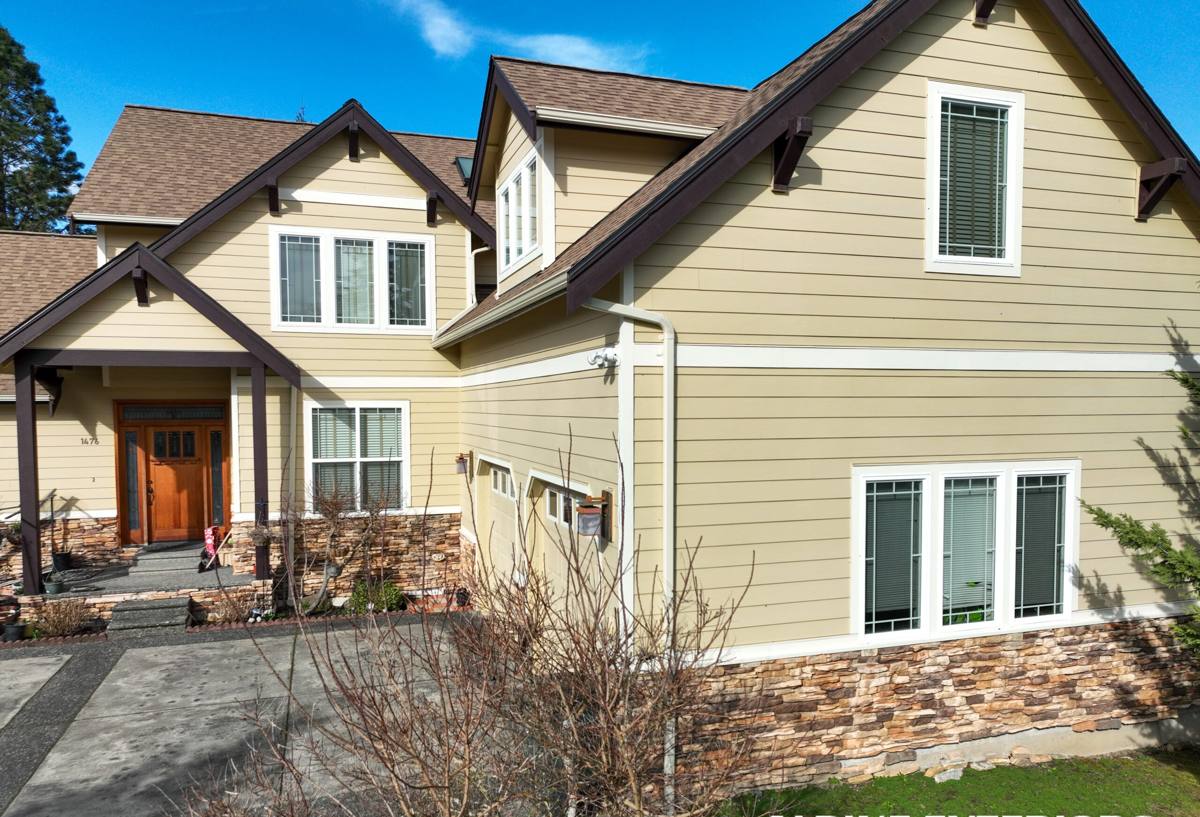
What Salt Air, Rain, and Moss Actually Do to a Shingle Roof
Three separate stressors combine on roofs in this part of Whatcom County, and each one attacks a different part of the roofing system.
Salt Air
Airborne salt from Birch Bay and the Strait doesn't just affect metal flashing and fasteners — though it does accelerate corrosion there. It also settles into the granule surface of asphalt shingles over time, and in combination with moisture it can gradually degrade the asphalt binder faster than it would in a drier, inland climate. This is one reason we pay close attention to fastener and flashing metal choice on every Terrell Creek job, not just the shingle itself.
Driving Rain
Storms coming off the water tend to push rain sideways rather than straight down, which means water gets forced up under shingle tabs, into exposed nail heads, and along ridge and valley lines that would stay dry in a calmer climate. A roof detailed for vertical rain only will leak here. Underlayment choice, nailing pattern, and valley and flashing detail all have to account for wind-driven moisture, not just gravity.
Moss and Algae
The long damp season in Whatcom County — often stretching from fall through spring with limited direct sun exposure on north-facing or tree-shaded slopes — creates ideal conditions for moss and algae growth. Moss isn't just cosmetic. As it establishes itself, it holds moisture against the shingle surface, works its rhizoids under tab edges, and can lift shingles enough to let water track underneath. Left unaddressed for years, a mossy roof ages faster than a clean one, regardless of the shingle quality underneath it.
What a Correct Asphalt Shingle Job Involves Here
A roof that's going to hold up in Terrell Creek's conditions needs more than a good shingle nailed down correctly. It's a system, and every layer matters.
- Deck inspection and repair — any soft, delaminated, or water-damaged sheathing gets replaced before anything goes back on, not covered over.
- Ice-and-water or high-quality synthetic underlayment — especially at eaves, valleys, and around penetrations, where wind-driven rain is most likely to find a way in.
- Proper flashing at every transition — chimneys, skylights, sidewalls, and roof-to-wall junctions, using corrosion-resistant metal suited to a salt-air environment.
- Balanced attic ventilation — intake at the eaves and exhaust at the ridge, sized to the attic volume, so moisture doesn't get trapped under the deck and accelerate rot from underneath.
- Algae-resistant shingle selection — most major manufacturers now offer shingles with copper- or zinc-infused granules specifically to slow algae and moss colonization, and in this climate that upgrade earns its cost back in reduced maintenance.
- Correct nailing pattern and fastener count — six nails per shingle in high-wind coastal zones rather than the four-nail minimum some crews still use, matched to manufacturer wind-rating requirements.
Skipping any one of these doesn't necessarily cause an immediate problem — a roof can look fine on install day even with shortcuts. The failures show up two, five, or ten years later, usually as a leak that traces back to a detail that was never done right in the first place.
Our Process for a Terrell Creek Re-Roof
1. On-Site Assessment
We walk the roof and the attic, not just one or the other. Attic conditions — insulation, ventilation, any signs of past moisture — tell us as much about the right approach as the shingle surface does. We also look at tree cover, slope orientation, and drainage patterns specific to the property, since those drive moss risk and gutter sizing.
2. Tear-Off and Deck Check
Full tear-off lets us actually see the deck rather than guess at its condition from above. Any damaged sheathing gets flagged and priced before replacement, not discovered as a surprise change order after the fact.
3. Underlayment and Flashing
This is where most of the long-term performance difference gets built in. We detail valleys, eaves, and every penetration for wind-driven rain, and we use flashing metal chosen for this coastal air, not generic stock.
4. Shingle Installation
Installed to manufacturer spec for nail count, pattern, and exposure, with attention to starter courses and ridge caps — the areas most prone to wind lift in coastal storms.
5. Ventilation Check and Final Walkthrough
We confirm intake and exhaust are balanced, clean up the site thoroughly (magnetic sweep for stray fasteners included), and walk the finished roof with the homeowner before calling the job done.
Choosing a Shingle for This Climate
Not every asphalt shingle product is a good fit for a damp, salt-air, moss-prone environment. Here's how the common tiers generally compare for a Terrell Creek home:
| Shingle Type | Moss/Algae Resistance | Wind Rating | Typical Lifespan Here |
|---|---|---|---|
| Standard 3-tab | Low — no algae-resistant granules | Lower | Shorter, especially on shaded slopes |
| Standard architectural (laminate) | Moderate | Good | Solid, mid-range performer |
| Algae-resistant architectural | High — copper/zinc granules slow growth | Good to excellent | Best value for damp, shaded lots |
| Impact-rated / premium laminate | High | Excellent | Longest-lasting, higher upfront cost |
For most Terrell Creek properties — particularly those with mature tree cover or a north-facing slope — we recommend at minimum an algae-resistant architectural shingle. The upgrade cost over standard architectural shingles is modest relative to the total job, and it directly targets the moss and staining issue that's most likely to bring a homeowner back to their roof between scheduled maintenance visits.
Cost Factors for a Terrell Creek Re-Roof
Every roof is different, and we don't quote sight-unseen, but these are the main variables that move the price on jobs in this area:
| Factor | Why It Matters |
|---|---|
| Roof size and pitch | More surface area and steeper slopes both add labor and material |
| Deck condition | Rotted or delaminated sheathing found at tear-off adds repair cost |
| Number of penetrations | Chimneys, skylights, and vents each need individual flashing detail |
| Shingle tier | Standard vs. algae-resistant vs. premium impact-rated products |
| Access and tree cover | Tight lots or heavy overhead branches slow staging and cleanup |
| Existing moss/moisture damage | Long-neglected moss growth sometimes means underlying deck repair |
Broadly speaking, a straightforward asphalt shingle re-roof on an average Terrell Creek home lands in the moderate range for the region; homes with steep or complex rooflines, extensive deck repair, or premium shingle selection run higher. We'll walk through the specific factors on your roof during the estimate rather than quoting a number that doesn't reflect your actual property.
Moss Prevention and Roof Maintenance Checklist
Whatever shingle product goes on, ongoing care matters more here than in drier climates. A few habits go a long way toward protecting the investment:
- Keep gutters clear so water isn't backing up under the eave line during heavy rain
- Trim back overhanging branches to reduce shade and debris buildup on north-facing slopes
- Have moss physically removed (not just chemically treated) before it establishes a heavy mat
- Use zinc or copper strips at the ridge as a supplemental moss deterrent on shaded roofs
- Schedule a periodic roof check rather than waiting for a visible leak inside the house
- Address small flashing or sealant issues promptly — they're inexpensive to fix early and expensive to ignore
Why a Crew That Already Works Terrell Creek Matters
Roofing crews unfamiliar with this specific stretch of Whatcom County sometimes default to specs and details that work fine in drier parts of the state but leave gaps here — under-ventilated attics, standard-grade flashing metal in a salt-air zone, or shingle selections that ignore moss exposure. A crew that regularly works Birch Bay and Terrell Creek has already seen how roofs in this exact microclimate age, which slopes tend to hold moisture, and which details actually matter versus which ones are optional elsewhere but not here.
There's also a practical side to local familiarity: knowing the permitting expectations for Whatcom County, understanding typical lot access and staging constraints in this neighborhood, and being available for a follow-up visit without a long drive if a question comes up after the job is done.
Signs Your Terrell Creek Roof May Need Attention
A few warning signs are worth acting on before they become bigger problems:
- Visible moss or algae streaking, especially on shaded or north-facing slopes
- Granules collecting in gutters or at downspout outlets
- Curling, cupping, or lifted shingle tabs, particularly after a windy storm
- Soft spots or sagging visible from the ground or attic
- Water staining on interior ceilings, even if faint or intermittent
Catching these early usually means a repair; waiting usually means a larger project.
If you're weighing a repair versus a full re-roof, or just want an honest read on where your Terrell Creek roof stands, we're happy to take a look. The estimate is free, there's no pressure to sign anything on the spot, and you'll get a straight answer about what your roof actually needs — use the form below to get started.