 Birch Bay
 Why Semiahmoo Calls for a Different Kind of Roof
Semiahmoo sits out on a narrow spit between Semiahmoo Bay and Drayton Harbor, right at the edge of Blaine near the Canadian border. It's one of the more exposed residential settings in Whatcom County — water on more than one side, very little standing between a house and the wind, and a marine climate that stays damp for long stretches of the year. The roof takes the first and hardest hit from all of that: salt-laden air, rain that gets pushed in sideways as often as it falls straight down, and a moss season that can run most months on shaded, north-facing slopes. Asphalt shingle roofing can be made to work out here, but a growing number of Semiahmoo homeowners choose metal roofing specifically because a correctly specified system holds up better against this exact combination of stressors than most other roofing materials do.
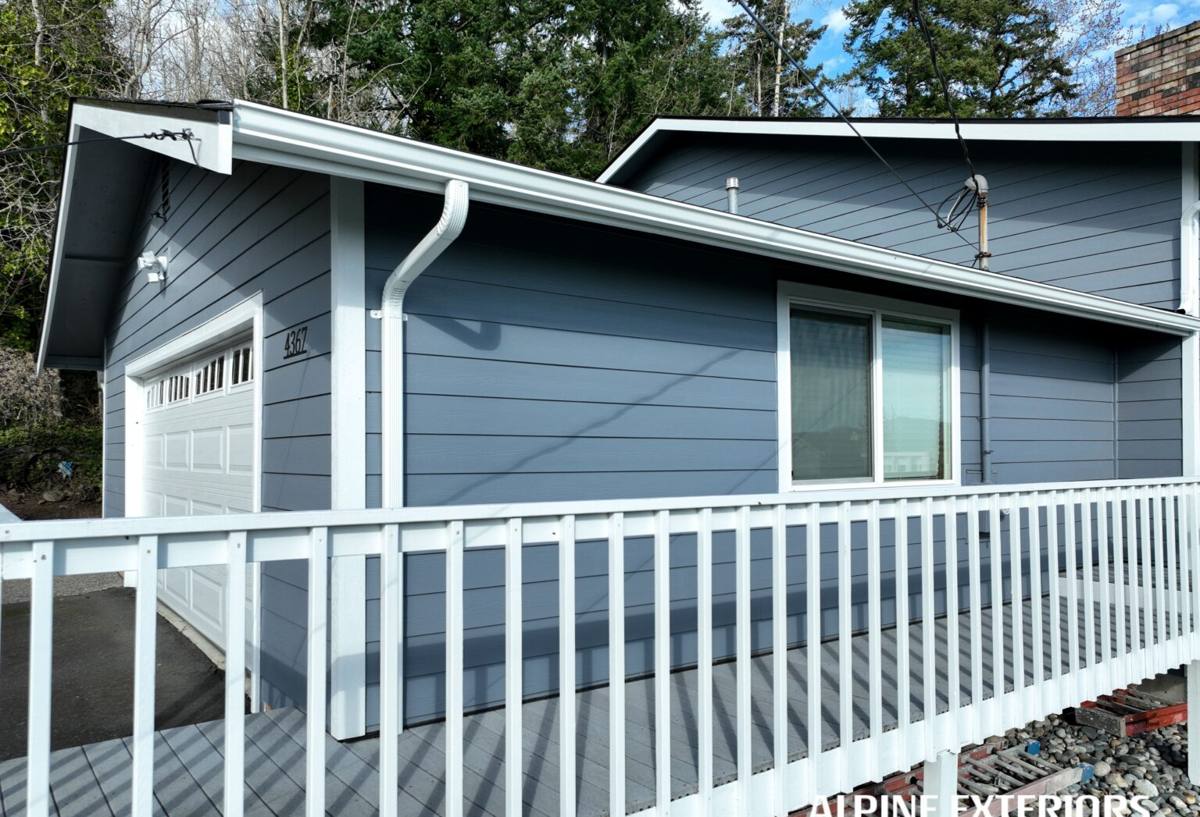
What Salt Air, Wind, and Rain Do to a Roof Here
Three things drive most of the roofing problems we see on the spit, and they compound each other rather than acting alone.
Corrosion at Fasteners, Seams, and Cut Edges
Because Semiahmoo is bordered by water on more than one side, homes here take on salt-laden air from multiple directions rather than one prevailing exposure. Metal roofing is more forgiving of that than shingles are, but only if the fasteners, clips, and flashing are actually rated for a marine environment. Standard-grade hardware and unsealed cut edges are where corrosion starts first, and it's invisible until a rust streak or a loose panel shows up years later.
Coating Breakdown and Chalking
The factory finish on a metal panel is what actually holds color and sheds water over the long run — the bare metal underneath is only as good as the coating protecting it. Salt air and steady UV exposure break down a weak or budget-grade coating faster than they would a few miles inland, showing up first as chalking, fading, or dulling on the sun-facing slopes.
Wind Uplift on an Open Spit
With almost no windbreak, wind-driven rain and wind load on the spit are both heavier than a typical inland Whatcom County lot ever sees. A metal roof system rated for the wrong wind exposure zone, or installed with too few clips or fasteners per panel, is a real uplift risk here in a way it might not be on a sheltered inland roof.
Why Metal Roofing Fits This Climate — and Its Honest Trade-Offs
A properly specified metal roof sheds wind-driven rain more aggressively than a shingle roof, and its smooth, non-porous surface gives moss and algae far less to hold onto than a granulated shingle does. It also handles the area's driving rain better at high-exposure roof planes, since there are fewer overlapping edges for water to work its way under. That performance comes with real trade-offs, though, and we'd rather lay them out honestly than oversell the product: metal roofing costs more up front than architectural shingles, some panel profiles can show minor waviness (known as oil canning) under certain light angles, and rain sounds different on a metal roof than on a shingle roof, which some homeowners like and others don't. None of those trade-offs are defects — they're just part of an honest decision about whether metal is the right fit for a given home and budget.
Choosing the Right Metal Roofing System
Not all metal roofing is the same product wearing a different name. The fastening method and panel profile change how the roof performs under Semiahmoo's specific mix of wind and rain.
| System | How It's Fastened | Performance in Wind-Driven Rain | Long-Term Maintenance |
|---|---|---|---|
| Standing seam | Concealed clips; no fasteners penetrate the panel face | Excellent; interlocking seams shed sideways rain well | Low; occasional seam and flashing check |
| Exposed-fastener (screw-down) panel | Screws with rubber washers penetrate the panel face directly | Good when new; washer gaskets are a future leak point | Moderate; gaskets typically need inspection or replacement within 10-15 years |
| Metal shingle or shake profile | Interlocking panels fastened along concealed edges | Good; combines a traditional look with a metal substrate | Low to moderate; more seams than standing seam |
Substrate and Finish
Most residential metal roofing is either Galvalume-coated steel or aluminum. Steel is strong and cost-effective, but its corrosion resistance depends on an unbroken coating — any cut edge or deep scratch needs to be sealed or touched up, or it becomes a starting point for rust in salt air. Aluminum doesn't rust at all, since it isn't an iron-based metal, which is why many contractors lean toward it on the most exposed waterfront lots even though it costs more and dents a bit more easily. On the finish side, a PVDF (often called Kynar-type) coating holds color and resists chalking significantly longer under UV and salt exposure than a standard SMP polyester finish. We'll walk through which combination of substrate and finish makes sense for a given roof's orientation and budget rather than defaulting to one option for every home.
What a Correct Installation Involves Here
The panel itself is the smallest part of what determines whether a metal roof performs on the spit. Most problems trace back to what's underneath it or around it.
Underlayment
Metal roofing needs a high-temperature synthetic underlayment rated for the panel type, with self-adhered membrane at eaves, valleys, and other vulnerable transitions. That membrane is the second line of defense if wind-driven rain ever works past the panel seams.
Flashing and Penetrations
Chimneys, vent stacks, skylights, and roof-to-wall transitions are where the majority of metal roof leaks actually start. Flashing at these points needs to be corrosion-resistant and properly integrated with the panel system, not just caulked over and hoped for.
Fasteners, Clips, and Expansion
Metal panels expand and contract with temperature swings, and a correct installation accounts for that movement with the right clip spacing and fastener type rather than fastening the panel rigidly in place. On a spit with this much salt exposure, every fastener and clip needs to be corrosion-rated hardware, not a standard interior-grade part.
Ventilation
Because metal doesn't absorb and release moisture the way a shingle roof does, proper intake and exhaust ventilation matters even more to keep condensation from forming on the underside of the deck. Skipping this is a common shortcut that shows up later as deck rot that has nothing to do with the panels themselves.
Moss, Debris, and Semiahmoo's Wet Season
A correctly installed metal roof grows far less moss than a shingle roof, since the smooth surface and steeper effective pitch of most panel profiles give moss spores less to grip. That doesn't mean a metal roof out here is maintenance-free. Valleys, gutters, and the transitions where a metal roof meets a lower shingle section or a wall still collect needles, leaves, and debris, and organic buildup sitting in a valley or gutter holds moisture against the metal longer than it should. Shaded, north-facing sections of a Semiahmoo roof will still show more buildup than sun-facing slopes, even on metal, so those areas are worth checking more often.
Our Process for a Semiahmoo Metal Roof
- On-site assessment. We inspect the existing roof, deck condition, ventilation, and wind exposure on the specific lot before recommending anything.
- System and finish selection. We go over panel profile, substrate, and coating options with honest trade-offs for the home's orientation and budget.
- Tear-off and deck inspection. Old roofing comes off so we can see the actual deck condition; any soft or damaged sheathing gets replaced before anything new goes down.
- Underlayment and flashing. The moisture barrier and flashing are installed first, since this layer determines whether the roof actually stays dry under wind-driven rain.
- Panel installation. Panels go in to manufacturer specification, with clip spacing, fastener type, and expansion allowance suited to this climate.
- Ventilation check. Intake and exhaust ventilation are confirmed to be working correctly before close-out.
- Final walk-through. We review the finished roof with the homeowner and go over care and warranty details.
What We Check During a Semiahmoo Metal Roof Estimate
- Current roof deck condition and any signs of prior water damage
- Existing flashing condition at chimneys, vents, skylights, and roof-to-wall transitions
- Attic or roof ventilation, intake and exhaust
- Which sides of the roof face open wind and water versus which are more sheltered
- Gutter and downspout condition, since debris here holds moisture longer than it should
- Any HOA, shared community, or design-guideline restrictions on roofing color or profile
Cost Factors for a Semiahmoo Metal Roof
Every roof prices out differently, and we don't quote a number without seeing the roof in person. These are the main variables that move a metal roofing estimate up or down.
| Factor | Why It Matters Here |
|---|---|
| Panel profile and gauge | Standing seam with heavier-gauge steel or aluminum costs more than a basic exposed-fastener panel |
| Coating tier | A PVDF finish costs more up front than SMP but resists chalking and fading far longer in salt air and UV |
| Roof complexity | More valleys, dormers, and penetrations mean more flashing detail and labor time |
| Tear-off and deck condition | Rot or soft sheathing found during tear-off adds repair cost not visible before the old roof comes off |
| Underlayment upgrade | Full self-adhered membrane coverage costs more than minimum-code underlayment but reduces wind-driven rain risk |
| Access and pitch | Steep or hard-to-access roofs take longer and need more safety setup |
Why Hire a Crew That Already Works Semiahmoo
A roofer who mostly works inland jobs isn't wrong about metal roofing in general — they're just working from a different set of defaults. Fastener grades, clip spacing, and coating choices that hold up fine on a sheltered inland roof are often undersized for what a spit property with water on more than one side deals with year-round. A crew that's already worked on Semiahmoo and around Blaine has seen which details actually fail out here — which fastener grades corrode first, which coating tiers chalk out early, which roof orientations take the worst of the wind — rather than working from a textbook assumption about coastal exposure.
If you're weighing a metal roof for a Semiahmoo home, we're glad to walk the roof with you and give an honest read on which system and finish actually fit your property and budget. Reach out below for a free, no-pressure estimate.