 Birch Bay
 Metal Roofing for Point Whitehorn: Built for a Waterfront Climate
Point Whitehorn sits along the Whatcom County shoreline just north of Birch Bay, and homes out here take on a specific combination of stress that inland roofs simply don't deal with. Salt-laden air comes straight off the water, wind-driven rain pushes sideways into roof-to-wall transitions and flashing details, and the wooded, often-shaded lots that give this area its character also mean a long moss and moisture season on north-facing roof planes. A roof here needs to handle all three at once, year after year, without cutting corners on any of them.
Metal roofing has become one of the better answers to that combination when it's specified and installed correctly. It isn't automatically the right fit for every home or budget, and it isn't magic — a poorly installed metal roof will still leak, still corrode, and still disappoint an owner who paid a premium for it. But when the metal, fasteners, and flashing details are matched to this specific coastal exposure, it's a system that can genuinely outlast the alternatives out here. This page covers what that actually looks like for a Point Whitehorn home, not a generic rundown of metal roofing in general.
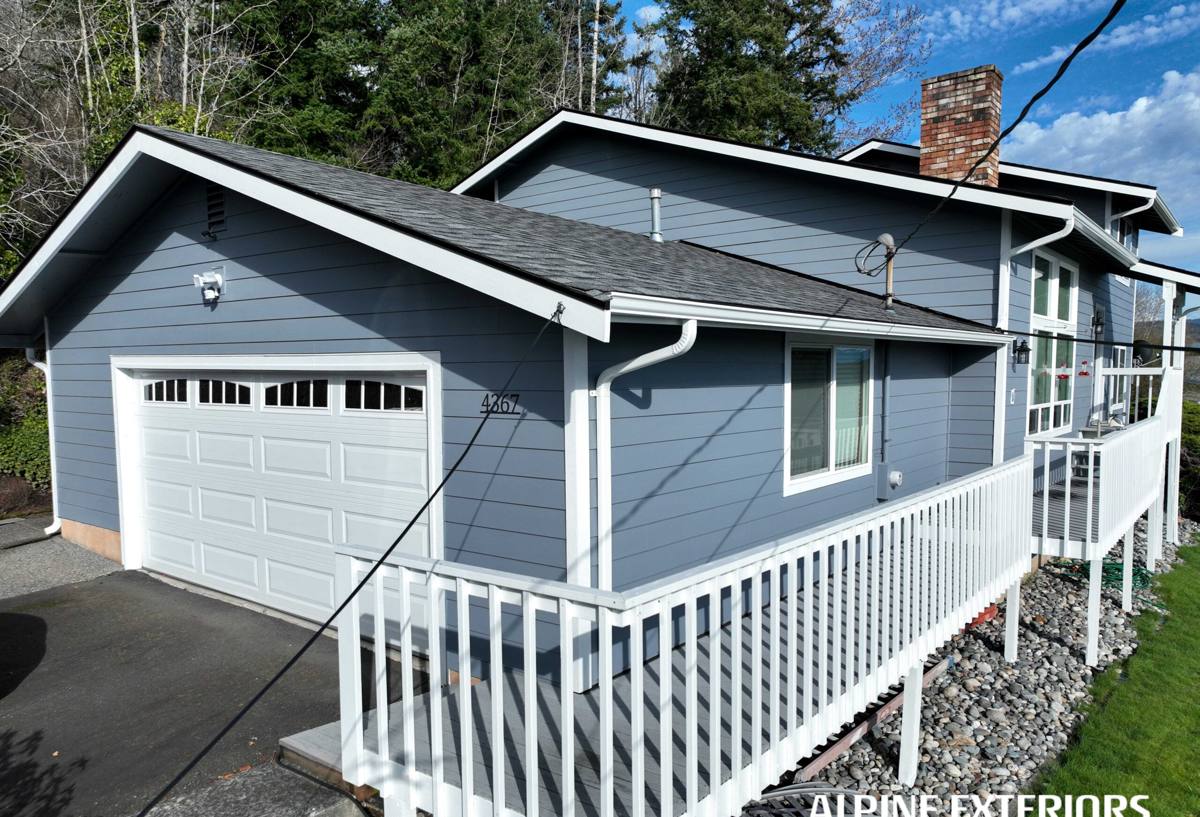
What Point Whitehorn's Climate Does to a Roof
Salt Air and Corrosion
Being close to the water means more airborne salt than a roof a few miles inland ever sees. Salt accelerates corrosion in unprotected or mismatched metal, breaks down lower-grade fasteners faster, and can undermine finishes that weren't engineered for coastal exposure. This is the single biggest reason metal roofing choices out here can't be made on price alone — the wrong alloy or the wrong finish in this environment shows its age in years, not decades.
Wind-Driven Rain at Seams and Penetrations
Waterfront exposure brings more sustained wind, and wind-driven rain doesn't behave like a straight-down downpour. It gets pushed sideways and upward into panel seams, ridge caps, and every place a pipe, vent, or chimney breaks through the roof plane. A metal roof's weather resistance lives almost entirely in those details — the field panels themselves rarely fail, but a poorly lapped seam or an under-flashed penetration will let water in during exactly the kind of storm this stretch of coastline gets regularly.
Moss, Shade, and Standing Debris
A lot of Point Whitehorn's residential lots sit under mature trees, and shaded, moisture-retaining roof surfaces are where moss and organic buildup take hold fastest. Moss holds water against a roof surface and, on some materials, accelerates deterioration underneath it. Metal sheds moss far better than shingles or wood shakes because it doesn't give organic growth the porous surface it needs to root into, but valleys, low-slope sections, and areas where debris collects still need attention regardless of material.
Why Metal Roofing Fits This Environment
We don't push metal roofing on every homeowner — it's a bigger upfront investment than asphalt shingles, and it isn't the right call for every budget or every roof shape. But for a lot of Point Whitehorn properties, the case for it holds up:
- Superior wind resistance: Properly installed metal panels are rated for significantly higher wind uplift than asphalt shingles, which matters on an exposed, waterfront lot.
- Sheds moss and debris: The smooth, non-porous surface doesn't give organic growth a foothold the way shingles or wood can, cutting down on the moss maintenance this climate otherwise demands.
- Long service life when matched correctly: A properly specified metal roof — right alloy, right finish, right fastener hardware — can outlast several cycles of asphalt shingle replacement.
- Sheds water fast: Steep water shedding reduces the time rain sits on the roof surface, which matters directly in a high-rainfall climate.
- Fire resistance: Metal roofing carries a non-combustible profile that some other roofing materials can't match.
The trade-off is cost and installation sensitivity. Metal roofing punishes a rushed or inexperienced install more visibly than asphalt does — expansion and contraction, fastener choice, and seam detailing all have to be right, or the roof's biggest advantages never show up in practice.
Standing Seam vs. Exposed-Fastener Metal Roofing
Not all metal roofing is built the same way, and the two most common systems perform very differently in a coastal, high-moisture climate like this one.
| System | How It's Fastened | Performance Here | Typical Upfront Cost |
|---|---|---|---|
| Standing seam | Concealed clips; no exposed fasteners through the panel face | Best long-term seal against wind-driven rain; expands and contracts without stressing fasteners | Higher |
| Exposed-fastener (screw-down) | Screws through the panel face into the deck | More fastener penetrations for water and salt to work against over time; gaskets wear and need eventual replacement | Lower |
Exposed-fastener panels aren't a bad product, and they have a legitimate place for outbuildings, garages, and budget-conscious projects. But on a primary residence this close to the water, we generally steer homeowners toward standing seam, because the concealed-fastener design removes hundreds of penetration points that salt air and driving rain would otherwise be working against for the life of the roof.
Metal and Finish Matter as Much as the System
The panel system is only half the equation — the metal itself and its finish determine how it holds up to salt exposure specifically. Aluminum doesn't rust and handles coastal salt air better than uncoated steel, which is why it's a common recommendation for waterfront properties. Galvanized and Galvalume steel can perform well too, but they depend more heavily on an intact protective coating, and any scratch or cut edge becomes a corrosion starting point in salty air. A high-quality baked-on finish, applied and maintained correctly at cut edges and fasteners, is what actually protects the metal over the long run, not just the base material.
What a Correct Metal Roof Installation Involves
A metal roof performs the way it's supposed to only when the details underneath it are right. That includes:
- Solid, properly prepared decking with any rot or soft spots addressed before panels go on
- A synthetic or high-temperature underlayment rated to protect the deck if wind-driven rain gets past the panel seams
- Correctly matched fasteners and clips — mixing incompatible metals accelerates corrosion through galvanic reaction
- Properly lapped and sealed flashing at every valley, ridge, wall transition, and roof penetration
- Adequate ventilation so moisture doesn't get trapped between the panels and the deck
- Correct panel spacing and fastening that allows for thermal expansion and contraction without stressing seams over time
Skipping any one of these doesn't necessarily show up on day one. It shows up two or three wet seasons in, when a corner that was cut quietly turns into a leak, a corroded fastener, or a panel that's started to buckle.
Signs an Existing Roof Needs Attention
Whether a Point Whitehorn home currently has an asphalt, wood, or older metal roof, a few warning signs tend to show up earlier here than they would inland:
- Moss returning quickly in shaded valleys or north-facing slopes after cleaning
- Rust streaking or discoloration around fasteners, flashing, or panel edges on an existing metal roof
- Granule loss in gutters and downspouts on an asphalt roof approaching the end of its service life
- Lifted, loose, or missing flashing around chimneys, vents, and roof-to-wall transitions
- Interior water staining near exterior walls or ceilings after a windy storm
- Visible sagging, soft spots, or daylight through the roof deck in the attic
Our Process for Point Whitehorn Roof Projects
We start with an on-site look at the existing roof and the specifics of the property — slope, tree cover, exposure to wind and water, and how the current roof has held up under this area's conditions. From there we walk through metal, finish, and system options honestly, including where a lower-cost approach makes sense and where it doesn't for this particular home. Once a scope is agreed on, we put it in writing before any work begins, covering materials, flashing details, and timeline.
During installation, the flashing, fastener, and ventilation details covered above are handled as standard practice on every roof, not offered as optional upgrades. A roof out here either has correct flashing at every transition or it doesn't — there isn't a middle option that holds up through a real Whatcom County winter.
Why a Local Crew Matters for This Kind of Roof
A crew that already works this stretch of coastline knows how salt air, wind exposure, and shaded moss buildup behave differently here than they do even a short distance inland. That shows up in which alloy and finish get recommended, how flashing gets detailed at wall transitions, and where extra attention goes on a shaded, tree-covered lot versus an open, sun-exposed one. Those are judgment calls built from repeated experience with this specific environment, not something a crew unfamiliar with the area gets right by default.
A Few Questions Worth Asking Before You Hire
- What metal and finish do they recommend for a property this close to the water, and why?
- Do they install standing seam, exposed-fastener, or both — and which do they recommend for your roof specifically?
- How do they detail flashing at valleys, penetrations, and wall transitions for wind-driven rain?
- Are they licensed and insured for roofing work in Washington State?
- Will you get a clear, written scope and warranty terms before signing anything?
If you're weighing a metal roof for a home in Point Whitehorn, or trying to figure out whether an existing roof needs repair or full replacement, we're happy to take a look and give you a straight answer. Reach out below for a free, no-pressure estimate.