 Birch Bay
 Roof Repair Built for Ferndale's Weather, Not a Generic Storm Checklist
Ferndale sits in the part of Whatcom County where Pacific storm systems come ashore with real force, and where the roof over your head has to shed water, resist wind, and survive months of damp shade every single year. When a storm damages a roof here, the repair has to account for what comes after it — the next atmospheric river, the next windstorm off the water, the next stretch of gray weeks where nothing dries out. A patch that would hold up fine in a drier climate can fail here in a season. We repair storm-damaged roofs in Ferndale with that reality built into the work, not bolted on as an afterthought.
This page is specifically about storm damage repair — wind, rain, and impact damage to an existing roof — not full roof replacement or routine maintenance, though we'll tell you honestly when a repair isn't the right long-term answer.
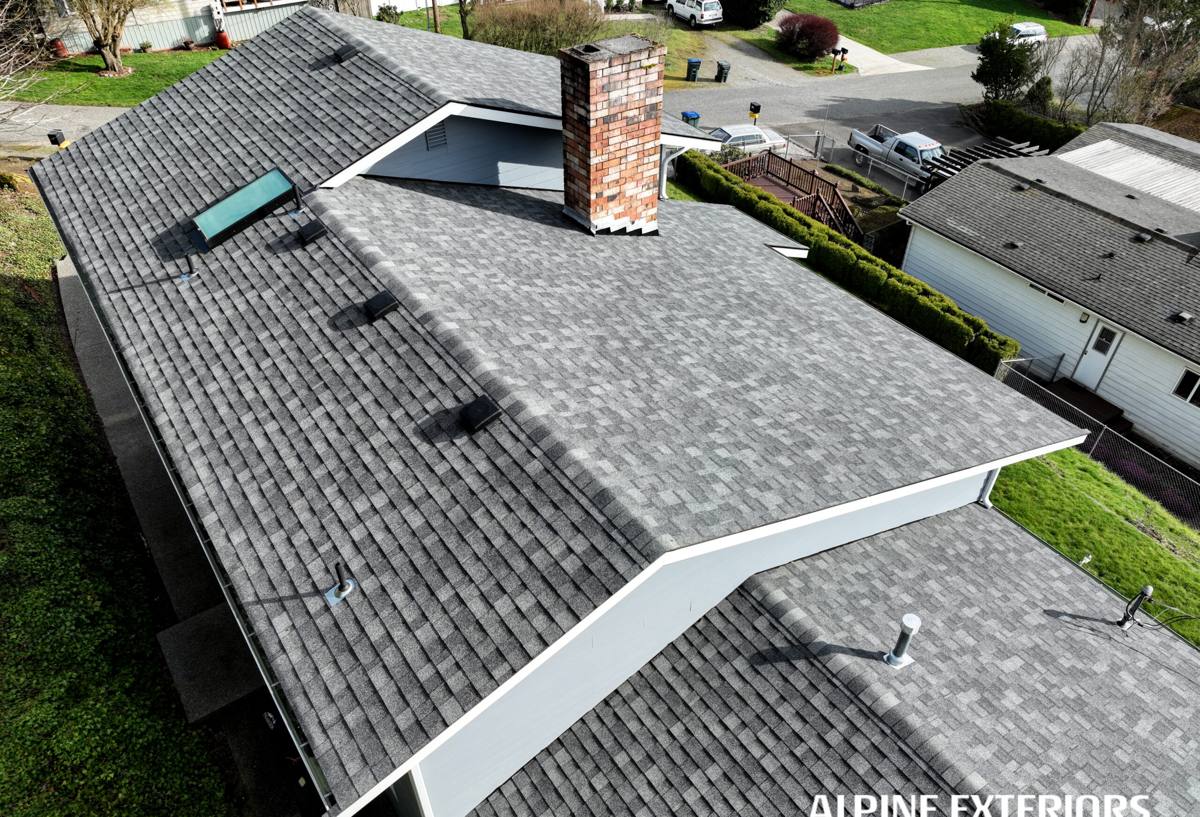
What Actually Counts as Storm Damage
Not every roof problem that shows up after a storm was caused by that storm, and not every visible mark means the roof is failing. Sorting that out correctly matters, especially if you're going to file an insurance claim.
Wind and Impact Damage vs. Ordinary Wear
True storm damage usually has a clear mechanical cause: shingles creased or torn loose by wind, flashing bent or pulled away, debris punctures, or granule loss concentrated in the direction the wind was blowing from. Ordinary wear looks different — it's spread evenly across the roof, tends to follow the roof's age, and shows up as curling, brittleness, or thinning that's been building for years. A contractor who can't tell you which one they're looking at, and why, isn't giving you a real inspection.
Damage That Doesn't Show Up Right Away
Some of the most costly storm damage isn't visible from the ground the day after a storm. Wind can lift a shingle's seal without tearing it off, leaving a gap that only leaks once rain hits it from a certain angle. Flashing can shift slightly at a chimney or vent and not leak for weeks. That's part of why a post-storm inspection is worth doing even when the roof looks fine from the driveway — the damage that costs the most is usually the damage nobody saw at first.
How We Approach a Storm Damage Repair
Inspection Before Anything Else
We start on the roof, not with a quote written from the ground. That means checking the field of the roof, all flashing points, valleys, penetrations, and edges — the places storm damage actually concentrates. We photograph what we find so you have a clear record, whether or not you end up filing a claim.
Repairing What's Actually Damaged
Our standard is to repair what's damaged and leave the rest of the roof alone. That means matching materials as closely as possible, tying new work correctly into the existing roofing system, and resealing and re-flashing properly rather than just covering a hole. If the damage is limited to one section, a full roof replacement isn't the honest recommendation — but if the roof is old enough or damaged widely enough that repeated repairs stop making financial sense, we'll say that plainly instead of running up a series of patches.
Documentation You Can Actually Use
If you're working with your insurance company, you need documentation that holds up: dated photos, a written description of the damage and its likely cause, and a scope of work that an adjuster can follow. We provide that as a standard part of the job, not as an upsell.
Salt Air, Driving Rain, and a Long Moss Season: Why Ferndale Roofs Age the Way They Do
Whatcom County's proximity to the Salish Sea means roofs here deal with a low-grade salt content in the air that accelerates corrosion on exposed metal — flashing, fasteners, vent caps, and gutter hardware age faster here than they would further inland. Combine that with driving rain that comes in at an angle during winter storms, and you get water finding its way into laps and seams that would stay dry in a calmer climate.
What the Moss Season Actually Does to a Roof
Whatcom County's mild, wet climate gives moss and moisture-loving growth months at a time to establish itself, especially on north-facing slopes and shaded sections of roof. Moss isn't just cosmetic — it holds moisture against the roofing material, lifts shingle edges as it grows, and creates channels that redirect water instead of letting it shed. A storm that hits a moss-covered roof does more damage than the same storm would on a roof that's been kept clear, because the moss has already compromised the seal.
Why Salt Air Matters for Repair Materials
When we repair flashing, fasteners, or any exposed metal component on a storm-damaged roof, we account for the corrosion rate that comes with living this close to the water. Using standard-grade hardware in a coastal Whatcom County environment is a common way for a "fixed" roof to develop a new leak in a couple of years — it's a detail that's easy to skip and expensive to have skipped for you.
Repair Options and What Drives the Cost
Storm damage repair isn't one-size-fits-all pricing, and anyone quoting a number before inspecting the roof is guessing. The table below covers the general categories of repair and the factors that actually move the cost.
| Repair Scope | What's Typically Involved | When It's the Right Call |
|---|---|---|
| Spot Repair | Replacing a small number of shingles, resealing lifted edges, patching isolated punctures | Damage is limited to a small, clearly defined area and the surrounding roof is sound |
| Section Repair | Replacing a full slope or valley section, re-flashing around penetrations, addressing underlayment in that area | Damage is concentrated but affects a larger continuous area, such as one roof plane after a wind event |
| Full Roof Replacement | Tear-off and replacement of the entire roofing system | The roof is near the end of its service life, damage is widespread across multiple sections, or repeated repairs are no longer cost-effective |
Beyond scope, the biggest cost factors we see on Ferndale homes are roof pitch and access, the age and condition of the surrounding roofing material, how well the existing material matches what's currently available, and whether flashing or decking underneath turns out to need attention once we're actually up there.
Working With Your Insurance Company
Most storm damage claims come down to two questions: was the damage caused by a covered event, and is the scope of repair reasonable for that damage. We won't tell you what your policy covers — that's between you and your insurer — but we will give you an inspection report and repair scope that's accurate and specific enough for an adjuster to work with, and we're glad to walk an adjuster through what we found on the roof directly if that's useful. What we won't do is inflate a scope of work to match an insurance payout, or write up damage that isn't there. That approach causes problems for homeowners down the road, and it's not how we do business.
Why It Matters That We Already Work in Ferndale
A crew that repairs roofs across a wide, varied territory sees a little of everything and a lot of nothing in particular. Working consistently in Ferndale and the surrounding Whatcom County area means we see the same roofing systems, the same age of housing stock, and the same storm patterns repeatedly — which means fewer surprises once we're actually on your roof. It also means we're not learning the local weather on your dime: we already know how driving rain behaves on a west-facing slope here, how fast moss reestablishes after a section is cleared, and which flashing details tend to be the weak point on older Ferndale roofs. That familiarity shows up as a repair that's scoped correctly the first time.
Signs You Should Have Your Roof Inspected After a Storm
You don't need to be able to diagnose roof damage yourself, but a few signs are worth a call regardless of how minor they look:
- Shingles or shingle pieces in the yard or gutters after high wind
- Granules collecting in downspouts or at the base of downspouts
- New or worsening water stains on ceilings or in the attic
- Visibly bent, lifted, or missing flashing around chimneys, vents, or skylights
- Sagging or uneven roof lines in any section
- Daylight visible through the roof deck from inside the attic
- Sudden increase in moss or dark streaking after a wet stretch
None of these guarantee serious damage, but any of them are reason enough for a proper inspection rather than a guess from the ground.
Getting the Roof Right, Not Just Covered
Storm damage repair done right accounts for the specific storm, the specific roof, and the climate that roof has to survive for years afterward. In Ferndale, that means factoring in salt air, driving winter rain, and a moss season that doesn't take much of a break. A repair that ignores those conditions might look fine on the day we finish — the real test is whether it holds up through the next several winters, which is the standard we hold our own work to.
If you've had storm damage, or you just want an honest inspection after a rough stretch of weather, we're glad to take a look. Use the form below to request a free, no-pressure estimate and we'll get you scheduled.