 Birch Bay
 New Roof Installation in Custer: Built for This Corner of Whatcom County
Custer sits inland from Birch Bay in the flatter, agricultural stretch of northern Whatcom County, close enough to the Canadian border and the Salish Sea that marine-influenced weather still shapes what a roof has to deal with here. It's not a direct waterfront exposure the way some of our other service areas are, but salt-laden air still reaches most properties in and around town, rainfall regularly comes in sideways on winter storms, and mild, damp conditions keep moss and algae growing across most of the calendar year rather than just a few wet months. A new roof installed here needs to be built for that combination from day one, not retrofitted for it after the first few callbacks.
This page is specifically about new roof installation — a full tear-off and replacement, not a patch or a spot repair. That's a bigger decision than most exterior projects a homeowner makes, and it's worth understanding what the climate actually demands, what a correct installation looks like underneath the shingles or panels, and how the process works before you're comparing quotes.
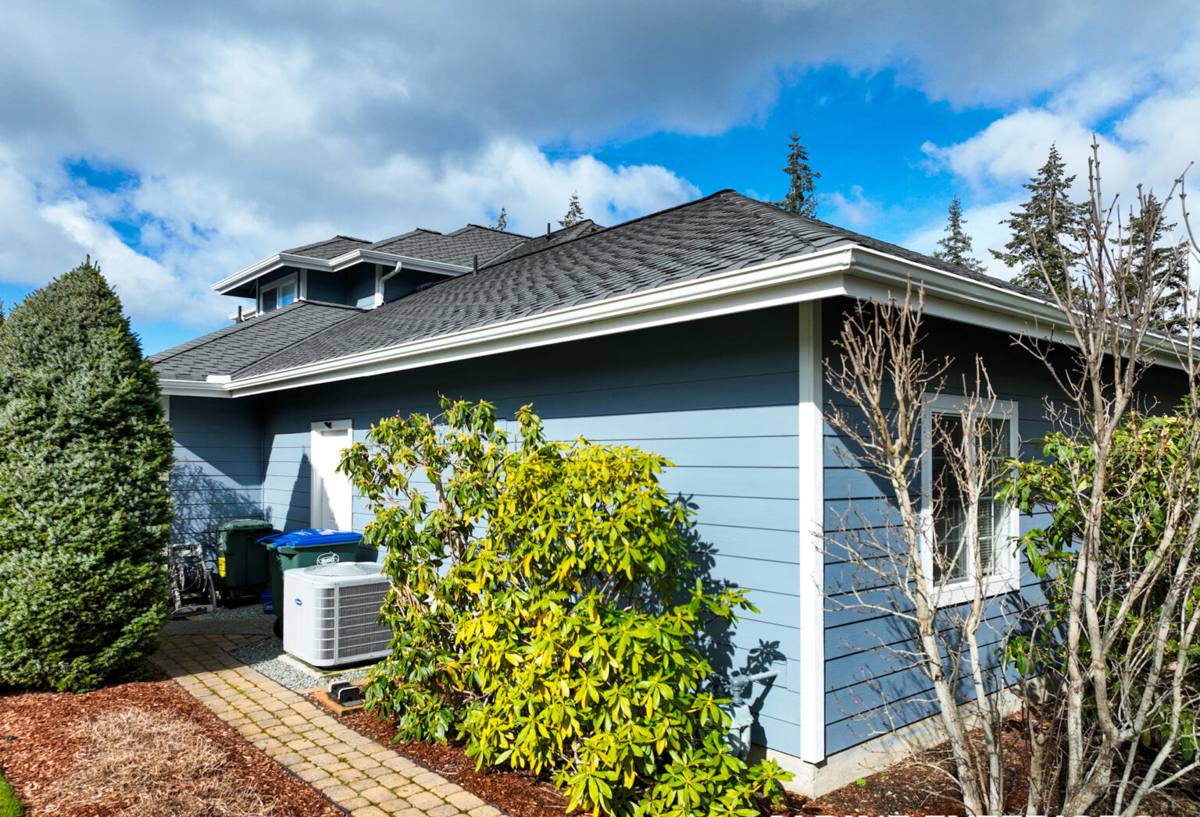
What Whatcom County's Climate Requires From a New Roof
Salt-Laden Marine Air
Even set back from the immediate coastline, Custer gets enough marine air carried inland to accelerate corrosion on lower-grade fasteners, flashing, and other metal roof components over time. A roofing system installed with corrosion-resistant hardware from the start holds up noticeably longer than one where that detail got treated as optional to save a little on materials.
Wind-Driven Rain
Open, flat terrain around Custer doesn't offer much of a windbreak, and storms moving through this part of the county tend to push rain sideways into roof valleys, around penetrations, and under flashing rather than straight down onto the field of the roof. That matters enormously for a new installation, because the underlayment, flashing laps, and sealing details are what stop that water — the roofing material on top is only part of the system.
A Long Moss and Algae Season
Mild temperatures and near-constant moisture through fall, winter, and spring give moss and algae a growing season that runs most of the year on shaded slopes and north-facing planes. A new roof doesn't prevent moss forever, but material choice, proper ventilation, and attention to shaded areas during design and installation all affect how fast it takes hold and how much damage it does once it's there.
Temperature Swings and Moisture Cycling
Whatcom County doesn't see extreme heat or hard freezes most winters, but the repeated cycle of damp, mild days punctuated by cold snaps still stresses roofing materials and the fasteners holding them down. A roof that stays saturated more often than it fully dries between rains ages differently than the same product would in a drier climate, which is part of why manufacturer climate ratings matter more here than the sales literature usually lets on.
Signs an Existing Roof Has Reached the End of Its Life
Not every roofing problem calls for a full new installation, but certain signs usually mean patch-and-repair has stopped being the honest answer:
- The roof is at or past its material's rated lifespan, especially if it's had multiple prior repairs
- Moss or algae damage is spread across several roof planes rather than one isolated shaded area
- The roof deck shows soft spots, sagging, or visible moisture damage when viewed from the attic
- Shingles are curling, cupping, cracking, or losing granules across large sections, not just one patch
- Flashing around chimneys, vents, and valleys is rusted, lifted, or missing sealant in multiple places
- Interior water staining has shown up in more than one location, suggesting the roofing system itself is failing rather than one localized leak
- A previous repair didn't hold, or the same area has needed attention more than once in a few years
One or two of these can often still be a repair. Several at once, especially combined with the roof's age, usually points toward a new installation being the more honest recommendation — not because replacement is the more profitable answer, but because continuing to patch an aging roof often costs more over a few years than doing the job once, correctly.
Choosing a Roofing System for the Installation
There's no single right material for every Custer roof — it depends on the roof's pitch, how much shade it gets, your budget, and how long you plan to stay in the home. What matters is understanding the real trade-offs for this specific climate before you commit to anything.
| Material | Moss & Moisture Behavior | Typical Maintenance | Realistic Lifespan Here |
|---|---|---|---|
| Architectural asphalt shingle | Performs well with proper ventilation and moss-resistant granule options | Periodic moss removal and gutter checks | 20-30 years |
| Standing seam metal | Sheds water and resists moss buildup well due to a smooth, non-porous surface | Low; occasional fastener and sealant checks | 40-60 years |
| Composite/synthetic shingle | Resists moisture absorption; performance varies by product quality | Low to moderate | 30-50 years depending on product |
| Cedar shake | Absorbs moisture readily; needs airflow underneath to dry between rains | Higher; regular treatment and moss control | 20-30 years with consistent upkeep |
We'll walk through which option fits your roof's pitch, sun exposure, and budget rather than steering every homeowner toward the same product. A steep, open roof and a low-slope roof shaded by trees don't call for the same answer, and we'd rather explain that trade-off up front than have you find out the hard way five years in.
What a Correct New Roof Installation Actually Involves
A new roof is only as good as what's underneath the visible surface. On every installation, regardless of the material chosen on top, these details aren't treated as upgrades:
Tear-Off and Deck Inspection
A full tear-off means removing the old roofing down to the deck, which is also the only real chance to check the deck itself for rot, soft spots, or moisture damage that's been hidden under the old material. Any damaged decking gets replaced before new underlayment goes down — installing a new roof over a compromised deck just buries the problem for the next homeowner or the next crew to find.
Underlayment and Ice-and-Water Shield
We use underlayment rated for sustained moisture exposure rather than a bare minimum-code product, and ice-and-water shield goes down at eaves, valleys, and other spots where water and debris tend to collect. This is standard practice on every job here, not an optional add-on, because it's exactly the layer that keeps a leak from ever reaching your interior even if wind-driven rain gets past the surface material.
Flashing at Every Transition
Every valley, chimney, vent pipe, skylight, and roof-to-wall transition gets flashing that's properly lapped and sealed with materials rated for sustained wet exposure. Given how much of this climate's rain arrives sideways rather than straight down, flashing quality is one of the biggest factors separating a roof that stays dry for decades from one that starts leaking within a few wet seasons.
Ventilation
Proper intake and exhaust ventilation lets moisture escape from the attic and roof deck instead of getting trapped underneath the new roofing, which matters for both the longevity of the roofing material and for keeping the deck itself from staying damp longer than it needs to. Ventilation gets evaluated and corrected as part of a new installation, not left as-is just because it's less visible than the shingles.
Our New Roof Installation Process
- On-site assessment. We inspect the existing roof, note its age, material, pitch, and condition, and check for signs of deck or structural issues from the exterior and, when possible, from the attic.
- Material and system walk-through. We go over roofing material options suited to your roof's specific exposure, budget, and how long you plan to stay in the home, and explain the real trade-offs of each rather than pushing one answer.
- Written scope and pricing. You get a clear, written scope before any work begins, so there's no ambiguity about what's included, what the contingency plan is if deck damage turns up, and what the warranty covers.
- Tear-off and haul-away. The existing roofing comes off down to the deck, with debris hauled away as part of the job rather than left for the homeowner to deal with.
- Deck repair, if needed. Any damaged decking uncovered during tear-off gets addressed before installation continues, with the cost and scope communicated clearly rather than sprung on you after the fact.
- Underlayment, flashing, and material installation. Ice-and-water shield, underlayment, flashing, and the roofing material itself go on in that order, following manufacturer specifications rather than whatever's fastest.
- Final walkthrough and inspection. We walk the finished roof with you, confirm ventilation and drainage are working as intended, and go over warranty documentation before calling the job complete.
Cost Factors and Timeline in Custer
Every roof is different, so we won't quote a number without seeing the property, but a few factors consistently drive cost and timeline on new roof installations in this area:
- Roof size and complexity: Square footage, pitch, and the number of valleys, dormers, and penetrations all affect labor time and material needs.
- Number of existing layers: A roof with multiple layers of old shingles takes longer to tear off and typically costs more to remove and haul away than a single-layer roof.
- Deck condition: Hidden rot or soft decking found during tear-off adds material and labor cost that's difficult to quote precisely before the old roofing comes off.
- Material choice: Asphalt, metal, and composite systems carry different material and installation costs, reflected in the comparison above.
- Weather windows: Whatcom County's wetter months can extend a project timeline if a stretch of driving rain halts work for safety and material protection reasons, which is worth factoring into scheduling expectations.
- Permitting and material lead time: Some materials, especially metal roofing panels, are ordered to spec and can take longer to arrive than off-the-shelf shingle products.
Most single-family new roof installations, once materials are on site and weather cooperates, take a few days to about a week depending on size and complexity. The bigger variable is usually scheduling around lead times and weather rather than the installation labor itself.
A Checklist Before You Hire Anyone for a New Roof
- Confirm current Washington contractor licensing and active liability insurance before signing anything
- Get a written scope that specifies underlayment type, flashing details, and ventilation work, not just the shingle or panel brand
- Ask how deck damage discovered during tear-off is handled and priced, so there are no surprises mid-project
- Ask what happens if weather interrupts the job partway through a tear-off
- Get a clear answer on what the manufacturer warranty covers versus what the contractor's own installation warranty covers
- Ask for a realistic timeline that accounts for material lead time, not just the installation days themselves
Why a Local Crew Matters for a Custer Roof Installation
A contractor who works this part of Whatcom County regularly already understands how wind-driven rain, marine air, and a long moss season behave on real roofs here, not just what a manufacturer's data sheet says about a product in ideal conditions. That shows up in specific decisions on installation day: how much ice-and-water shield a given valley actually needs, which flashing details are worth the extra time, and which shaded roof planes need extra attention because moss will find them first. It also means a crew that isn't guessing at how a coastal-influenced inland climate differs from a drier one, because they've already seen it play out on other roofs nearby.
We handle roofing, siding, windows, and decks, and we treat a new roof installation as connected to the rest of the exterior rather than an isolated job. If tear-off turns up moisture damage at a wall-to-roof transition or aging trim nearby, we can address it as part of the same conversation instead of sending you to find a second contractor.
If you're weighing a new roof for a Custer property, or you're not sure yet whether your existing roof is a repair or a replacement, we're glad to take a look and give you a straightforward, honest read. Reach out using the form below to schedule a free, no-pressure estimate.