 Birch Bay
 Windows Take a Different Kind of Beating at Cherry Point
Cherry Point sits close enough to the water that its homes deal with a specific combination of stresses most inland window installers rarely think about: salt-laden air, wind-driven rain that hits window assemblies sideways instead of straight down, and a wet season that stretches long enough to grow moss on anything that holds moisture. None of that is exotic weather — it's just Whatcom County's normal marine climate, day in and day out, for years on end. But it adds up differently on window frames, sills, and the flashing behind them than it does thirty miles inland.
Salt air is corrosive to certain hardware and finishes, and it doesn't need a storm to do its work — a steady, low-grade exposure over a decade will find every weak point in a window's construction. Driving rain, meanwhile, tests things that calm rain never touches: the seal between the window unit and the rough opening, the pitch of the sill, and whether the flashing was actually lapped correctly rather than just caulked and hoped for. And moss season is really a shorthand for "prolonged dampness" — anywhere water can sit against wood trim or collect in a poorly sloped sill, it will, and that's where rot starts.
None of this means Cherry Point homes need anything unusual. It means the ordinary parts of a window installation — the flashing, the sealant, the sill pan, the hardware finish — have to be done right every time, because there's less margin for error here than in a drier climate.
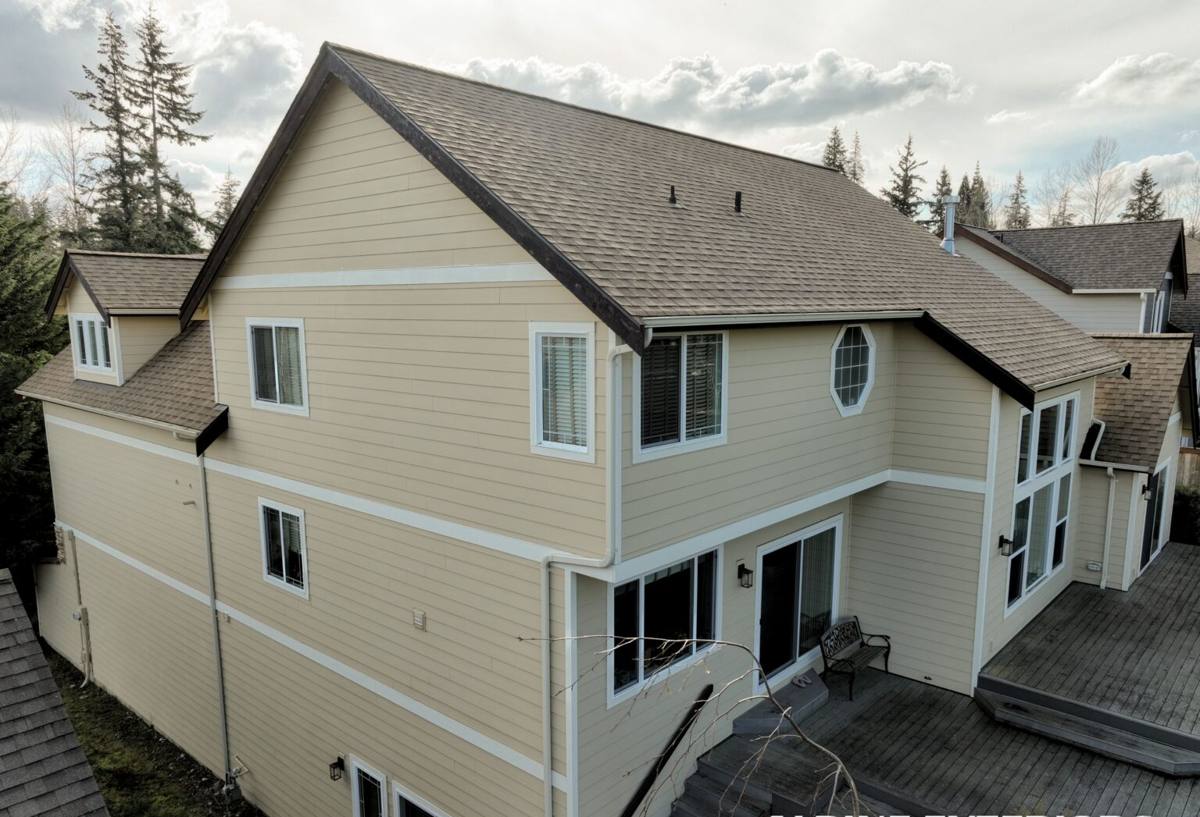
What a Correct Window Replacement Actually Involves
Window replacement gets marketed as a simple swap: old window out, new window in. In a marine climate, the window itself is often the easy part. The work that actually determines whether the job holds up is the water management around it.
The parts homeowners don't see
- A sill pan or sloped sill detail that directs any water that gets past the window back outside, not into the wall cavity
- Flashing tape or building paper integrated in the correct shingle-lap order, so water moving down the wall sheds over each layer instead of behind it
- Backer rod and sealant sized correctly at the perimeter — too little sealant fails fast, too much can trap moisture instead of letting it escape
- Shimming and fastening that keeps the frame square without bowing it, which affects how well the sash seals for the life of the window
The parts homeowners do see
Trim, caulking lines, and hardware finish are what most people judge a job by, and they matter for appearance and for keeping water out of joints. But they're the last five percent of the work. A window that looks perfect on install day and was flashed poorly will show it within a few wet seasons — usually as staining, soft trim, or a draft that wasn't there before.
Signs a Cherry Point Home's Windows Are Due
Coastal Whatcom County homes tend to show window failure in a fairly consistent pattern. Worth checking before winter storms roll in:
- Condensation building up between the panes of a double- or triple-pane window (a sign the seal has failed and the gas fill is gone)
- Soft or discolored wood at the bottom corners of the frame or sill — the most common rot starting point
- A noticeable draft or cold spot near the window even when it's fully latched
- Hardware — locks, cranks, hinges — that's corroded, stiff, or won't latch tight anymore
- Visible daylight or a whistling sound around the frame during wind-driven rain
- Paint or finish that's bubbling or peeling specifically around the window, not the wall in general
- Difficulty opening or closing that wasn't there a few years ago, often from a frame that's swelled or racked slightly
One or two of these on their own might just mean a repair. Several at once, especially combined with visible rot, usually means the window has reached the point where replacement costs less over time than another round of patching.
Choosing a Window Built for This Climate
Frame material matters more here than in a drier region, because the frame is what's absorbing the daily cycle of damp air, rain, and the occasional salt exposure. There's no single "correct" choice for every home — it depends on budget, the home's style, and how much upkeep an owner wants to take on — but the trade-offs are worth understanding upfront.
| Frame Material | Moisture / Salt-Air Resistance | Maintenance | Typical Lifespan |
|---|---|---|---|
| Vinyl | Good — won't rot or corrode, but can become brittle over many years of UV and weather exposure | Low | 20–30 years |
| Fiberglass | Very good — dimensionally stable, holds paint well, minimal expansion/contraction in damp-to-dry cycles | Low | 30-plus years |
| Aluminum | Fair — durable but a poor thermal break and prone to condensation without a good thermally-broken design | Low to moderate | 20-plus years |
| Wood / Wood-Clad | Weakest link is the exposed wood — needs a well-maintained exterior clad or finish to hold up to driving rain | Higher | Varies widely with upkeep |
On glass packages
For this area, the details that matter more than the marketing name are: a warm-edge spacer (rather than a plain aluminum spacer, which conducts cold and encourages condensation at the edge of the glass), a low-E coating tuned for the Pacific Northwest's mix of overcast days and low winter sun angle, and an argon or krypton fill that's actually sealed well — a good gas fill in a poorly sealed unit still fails early. We can walk through which package fits a given home's exposure and budget without steering toward the most expensive option by default.
How the Job Runs, Start to Finish
- On-site assessment. We look at each window individually — sill condition, any signs of rot in the rough opening, existing flashing, and how exposed that side of the house is to wind-driven rain off the water.
- Honest scoping. If we find rot or damage behind an old window, we tell you before work starts, not as a surprise mid-job. Sometimes it's minor trim; occasionally it's more structural framing repair.
- Removal. Old units come out carefully to avoid unnecessary damage to siding or trim that's staying in place.
- Opening prep. This is the step that determines long-term performance: sill pan or sloped sill correction, proper flashing integration, and confirming the opening is square and solid before the new unit goes in.
- Installation. Shimmed, squared, and fastened to the window manufacturer's specifications — not just "close enough."
- Sealing and finish work. Backer rod, sealant, and trim, done in a way that sheds water rather than trapping it.
- Walkthrough. We check operation, latching, and sightlines with you before calling it done.
What Drives the Cost
Every home is different, and we'd rather walk a property and give a real number than quote a range that doesn't mean much. That said, these are the main factors that move price up or down:
| Factor | Why It Matters |
|---|---|
| Frame material | Vinyl, fiberglass, and wood-clad carry different material costs and different long-term maintenance costs |
| Full-frame vs. insert replacement | An insert reuses the existing frame if it's sound; full-frame replaces it entirely, which costs more but is often necessary when there's rot or the opening needs correction |
| Number and size of openings | Larger units and multi-window jobs have per-window efficiencies but more total material |
| Condition behind the old window | Rot or water damage found during removal adds repair scope that isn't visible from a curbside estimate |
| Glass package | Upgraded low-E coatings, gas fills, and impact-resistant glass all add cost proportional to performance |
| Trim and exterior finish work | Matching existing trim profiles or upgrading exterior cladding around the window adds labor |
Why Local Experience at Cherry Point Actually Matters
A window is a manufactured product — the unit itself performs about the same whether it's installed in Birch Bay or somewhere with a milder climate. What differs is everything around it: how the specific exposure of a given lot affects flashing decisions, how much margin to build into sealant and sill details for a place that gets sustained wind-driven rain, and recognizing early rot patterns particular to homes that have weathered a lot of damp seasons near the water.
A crew that's replaced windows across Whatcom County's coastal neighborhoods has already seen which details hold up here and which ones cause callbacks two or three winters later. That's not a marketing point — it changes real decisions on the job, like whether a sill needs an extra slope correction or whether a particular corner of a house needs a more conservative flashing detail because of how weather typically hits it.
After the Install: Keeping Windows Performing
New windows in a marine climate still benefit from basic upkeep — this isn't unique to us, it's just true of any window near the water:
- Rinse accumulated salt and grime off exterior frames and glass periodically, especially after storms
- Check exterior caulking lines annually and touch up any cracking before wet season sets in
- Keep gutters and downspouts clear so roof runoff isn't sheeting down across window heads
- Clear moss or debris that collects on sills or in weep holes, since blocked weep holes stop windows from draining properly
- Operate locks and hardware periodically through the year rather than leaving them untouched for months
None of this is heavy maintenance — it's the kind of five-minutes-a-season attention that keeps a good install performing for its full lifespan instead of running into avoidable problems.
Get a Straight Answer for Your Home
Every Cherry Point property faces the water a little differently, and that affects real decisions about sill details, flashing, and which window will actually hold up. If you're seeing drafts, fogged glass, soft trim, or just windows that are past their prime, we're happy to take a look and give you a straightforward, no-pressure estimate — use the form below to get started.